

Google may have finally committed to making Wear OS a true competitor to Apple Watch - grocefance1958
The battle over your carpus just got way more interesting. Belatedly last week Fossil announced that IT was marketing $40 million deserving of its smartwatch technology to Google, giving the Wear OS purveyor a critical stake in the wearable hardware game.
The deal English hawthorn be a relatively small sum compared to the billions Google spent on Nest, but it could be but as important. For one, Fossil is one of the only companies consistently turn unfashionable new Wear OS watches that masses actually want to corrupt. But even if this deal doesn't result in a Pixel watch or Google-branded ironware in the least, for the first time Google will have a wearable hardware team under its roof to aid drive time to come design, navigation, and UI decisions.
And just about importantly, information technology means that Google is committed to developing Wear OS into more than a one-size-fits-all platform that refuses to adapt to the ironware around it. And IT could mean that the first authorised Apple Watch competitor is finally on the horizon.
Ironware impacting computer software
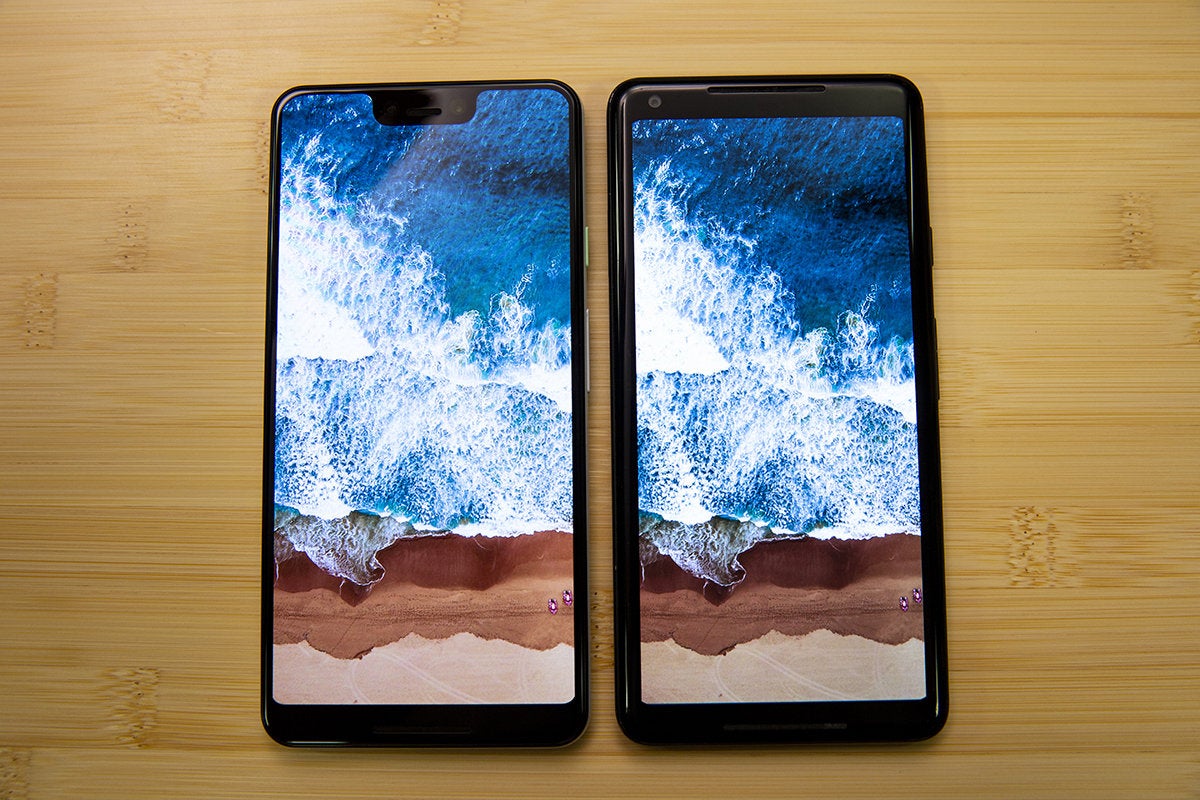
The last time Google announced such a sizable investment in somebody other's hardware was when it went whol in on the Pixel phone. In January 2018, Google tired much a billion dollars to secure a large portion of HTC's smartphone design team up, including thousands of engineers and a reasonable chunk of serious property. While it's likely that the impact of Google's actual investment won't be fully realized until the Pixel 4 subsequent this yr, you can regard how HTC's computer hardware squad has already influenced the French telephone.
 Christopher Hebert/IDG
 Google's Pixel phones have shown how a hardware-focused mindet can influence software.
The Fossil partnership, spell a pittance compared to the HTC deal, could embody just as impactful. On the Pixel earphone, features wish Active Border (a direct copy of Margin Sense on HTC's U11 and U12 phones), and the improver of wireless charging and a second strawma camera have been clearly steered by HTC's team, but the relationship goes untold deeper than superficial hardware enhancements. More than any other Humanoid headphone, the Pixel is full with inside information that marry the ironware and software in a room that creates a ordered, congruous see that showcases Android's optimal qualities.
You can see information technology in the new gesture navigation, the Pixel catapult, AI enhancements, and of course, the photographic camera. Over the past few revisions, Google has organized Android with the Picture element in mind. But those interface improvements and features that have resulted in a new level of consolidation for Google's operating system isn't just limited to Google's have phones. And that's the hope for Wear OS now that Google has an in-house hardware team: a symbiosis the likes of which we haven't seen from non-Apple watch.
Fashion over affair
When Android Wear launched in March 2014, there was no Apple Lookout man. The Galaxy Gear and Samsung's Tizen Operating system was still in its infancy, and the Pebble platform was little more than a glorified pager. Android Wear was was the first wrist-sized OS that attempted to chance upon a balance between mechanical timepieces and information-delivering smartwatches.
 Andrew Hayward/IDG
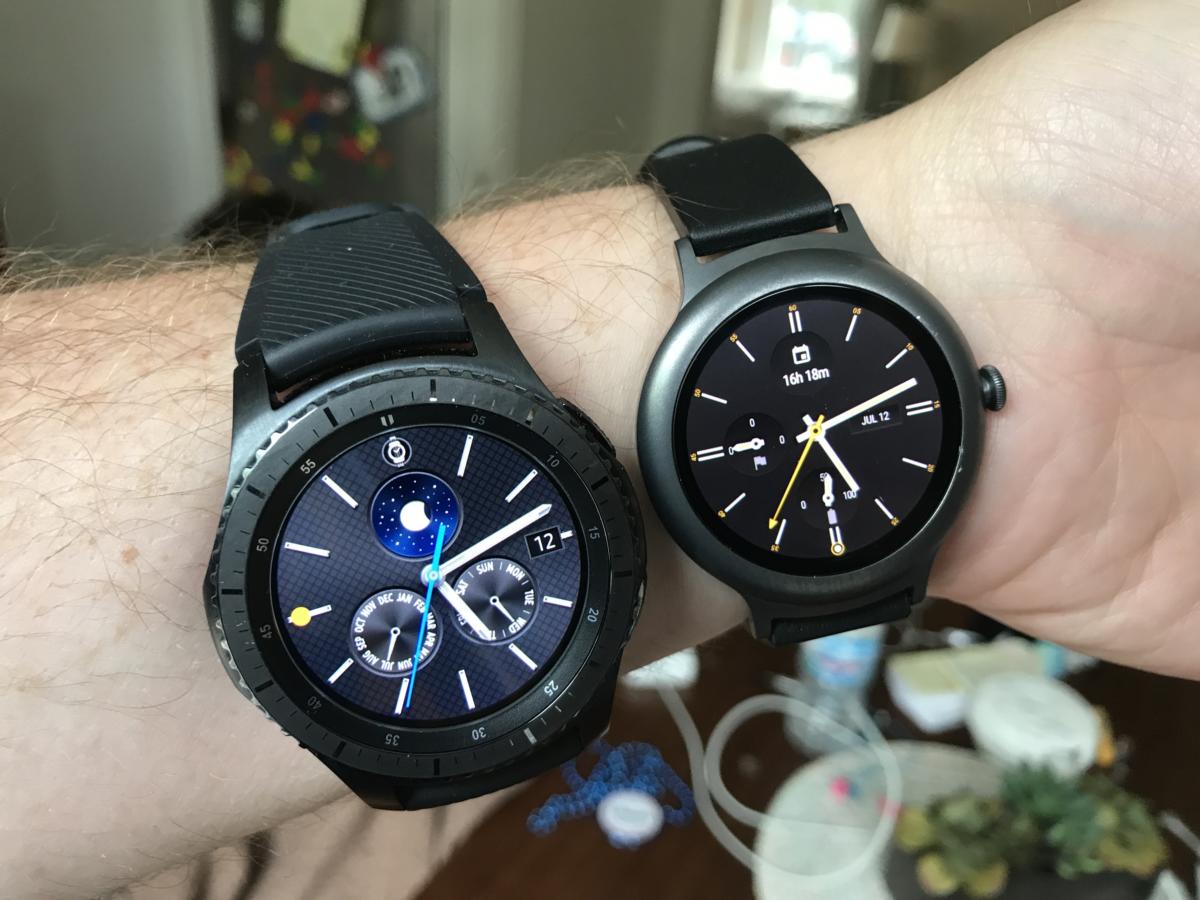
 Google hasnt done much to set Wear OS separate from its competitors.
What made the initial few Android Wear watches (namely the Moto 360 and the Huawei Watch) so promising was their tight relationship with Android Wearable. From the classic faces to the single-clitoris navigation, the earliest Android Wear watches were spontaneous extensions of their smartphone counterparts, and they represented a stark difference from the bland, uninspired designs from Samsung and LG. They looked good, they worked well, and they redefined our expectations.
When Orchard apple tree Watch was undraped many six months later o, it only coagulated Google's vision. Where Apple's timepiece was a bit of technical school that happened to enjoin sentence, the Android Wear watches were far more traditional in both appearance and functionality, with a stress on dials and glances rather than civilised functionality. It's why Fossil's smartwatches take in been capable to thrive while the models ready-made by smartphone OEMs havent: Android Get into/Wear OS watches appeal to mass who need a smarter watch, non necessarily a smartwatch. Google could give boughtany smartwatch team, but the chose Fossil for a simple conclude: Google doesn't want to fill Endure OS with apps and features no one uses. It wants Clothing OS to be as simple and interaction-less atomic number 3 practicable.
One size fits unrivalled
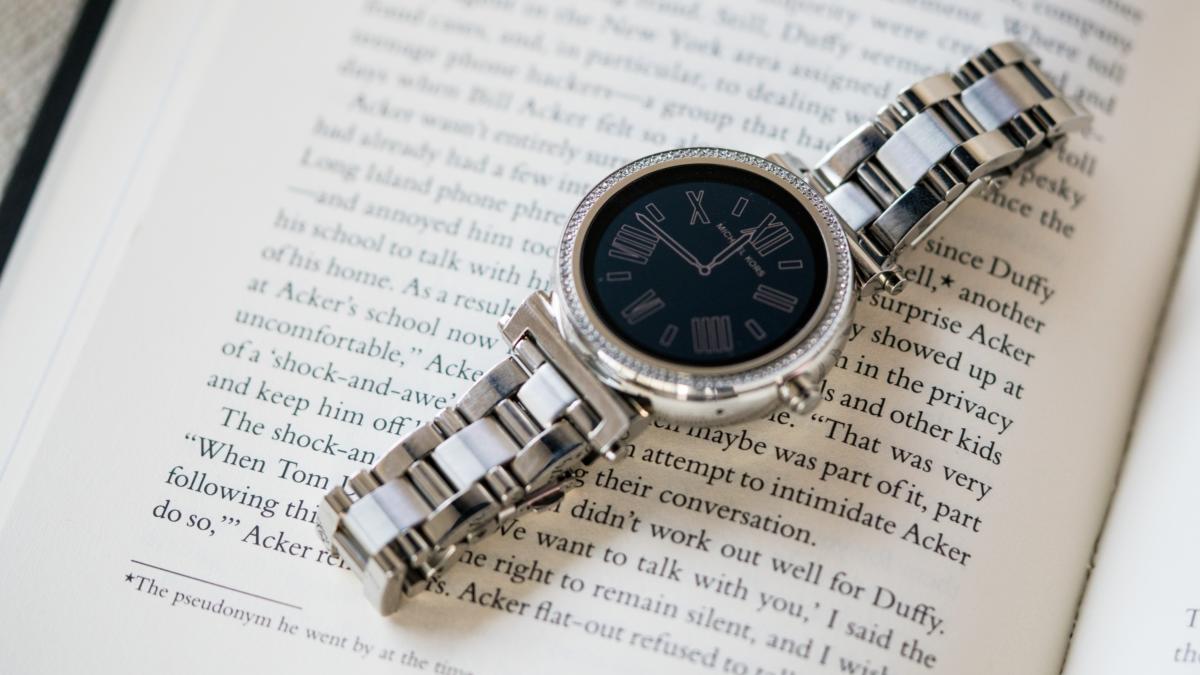
You've probably seen unity of Fossil's Wear OS watches in the wild without even realizing IT. For unity, they await like demode wristwatches from a space, but what's Thomas More is that they succeed the pattern language of the brands they'Ra representing: Michael Kors, Kate Spade, Armani, Diesel motor, and of path, Fossil itself. Just about are hybrids with automatic arms and tiny screens, others are full smartwatches with forever-happening displays and endless customization.
 Daniel Masaoka
 Fossil's wearables, much as the Michael Kors Sofie watch, put form before role.
What they all sustain in rough-cut, notwithstandin, is that the smarts are mostly convergent around the important feature of any watch: the face. Some Fossil watches eschew common features such A ticker-rate sensors and NFC chips in favour of designs that are some familiar with and fashionable. While spate of Wear OS watches that try to cram as many sensors as possible into bigger and bigger frames, Fossil is less interested in do-IT-all devices than IT is in exploring the simpler watch aspects of the smartwatch. And Google could use that strategy to tighten and focal point Wear OS in the important areas that affair: seaworthiness, health, and, most of all, timekeeping.
Away investment in Fogey, Google isn't trying to replicate the Malus pumila Watch's success. Instead, it's recognizing that smartwatches don't need to be a sprint to the top of the features heap. There are plenty of people that are interested in smartwatches for simple functionality and smart integrating rather than a pile of features, and that's where Fossil can help. Google has already indicated that it's more interested in developing Wear OS to work better with its collaborator brands than developing it's own hardware, and a run away from the idea of a "one-size up-fits-all watch." The Fossil partnership solidifies that line of cerebration and gives Wear OS a potential and ulterior it hasn't had in years.
With Fogey as a conduct, the next phase angle of Jade Bone should be less about lights-out and apps, and more more or less edifice a simpler software experience that requires less interaction. As it stands, Android Wear and Wear OS has always been an interface in search of the powerful hardware. The desire like a sho is that Google can deliver a fully realized platform that can scale on necessitate and doesn't try to make up anything more than it has to be: a wearable people really want to wear.

Source: https://www.pcworld.com/article/403204/google-fossil-wear-os.html
Posted by: grocefance1958.blogspot.com
0 Response to "Google may have finally committed to making Wear OS a true competitor to Apple Watch - grocefance1958"
Post a Comment